
What a Technician Sees This Time of Year
By late October, a typical service call around here follows the same pattern. The homeowner says the door was fine all summer, then one cold morning it groaned, jerked, or wouldn't budge at all. Nine times out of ten, the technician finds the same culprits: hardened or missing weatherstripping letting cold air pour into the garage, lubrication that's turned gummy from months of heat and dust, and rollers or hinges that have been quietly wearing out all year without anyone noticing. None of it was urgent in July. In January, with ice on the slab and a spring under full tension in freezing air, it's a different story.
Why This Climate Is Hard on Garage Doors
Garage doors in this part of Pennsylvania deal with more abuse than most people realize. Freeze-thaw cycles are the big one — a day of melting snow followed by a hard overnight freeze means water gets into gaps, cracks, and seams, then expands as ice. That stresses weatherstripping, panel seams, and even the slab itself over time. Road salt tracked in on tires and boots corrodes springs, cables, and hardware faster than people expect, especially on doors that are already a few decades old, which describes a lot of the housing stock in Ellwood City and the surrounding towns. Add in the occasional nor'easter dumping heavy, wet snow and wind-driven ice, and you've got a system that needs to be mechanically sound before the season turns, not after.
A Pre-Winter Checklist That Actually Matters
1. Check and Replace Weatherstripping
The rubber seal along the bottom of the door and the vinyl strips along the sides are your first line of defense against snowmelt, wind, and cold air. If it's cracked, flattened, or pulling away from the track, replace it now. It's a low-cost fix that keeps water from pooling under the door and freezing overnight, which is a common reason doors get stuck to the slab.
2. Lubricate the Moving Parts — With the Right Lubricant
Rollers, hinges, and the torsion spring itself all need a silicone-based or lithium-based garage door lubricant before cold weather sets in. Avoid WD-40 or household oil; they attract dust and grit and can actually gum up in low temperatures. A few minutes with the right product on every moving joint will noticeably reduce the groaning and sticking that shows up on the first really cold mornings.
3. Inspect Cables and Tracks
Walk the tracks and look for rust, dents, or gaps where the rollers ride. Salt spray and humidity speed up corrosion on cables, and a cable that's fraying in October will not get better in January — it'll likely fail when you least want it to, often right as the spring is under maximum load from cold-stiffened metal. If you see visible fraying, kinks, or a track that's pulled away from the wall, that's worth addressing before the first snow, not after.
4. Have the Springs Checked
Torsion and extension springs lose some elasticity in extreme cold, and they're already doing the hardest job in the system — lifting a door that can weigh well over a hundred pounds. A spring that's been quietly weakening all year is far more likely to snap on a frigid morning than a mild one. Springs are also the single most dangerous part of a garage door to work on yourself, since they're under heavy tension even when the door looks still. If yours is older, rusted, or you're not sure when it was last replaced, this is the one item on the list worth having a professional look at rather than guessing.
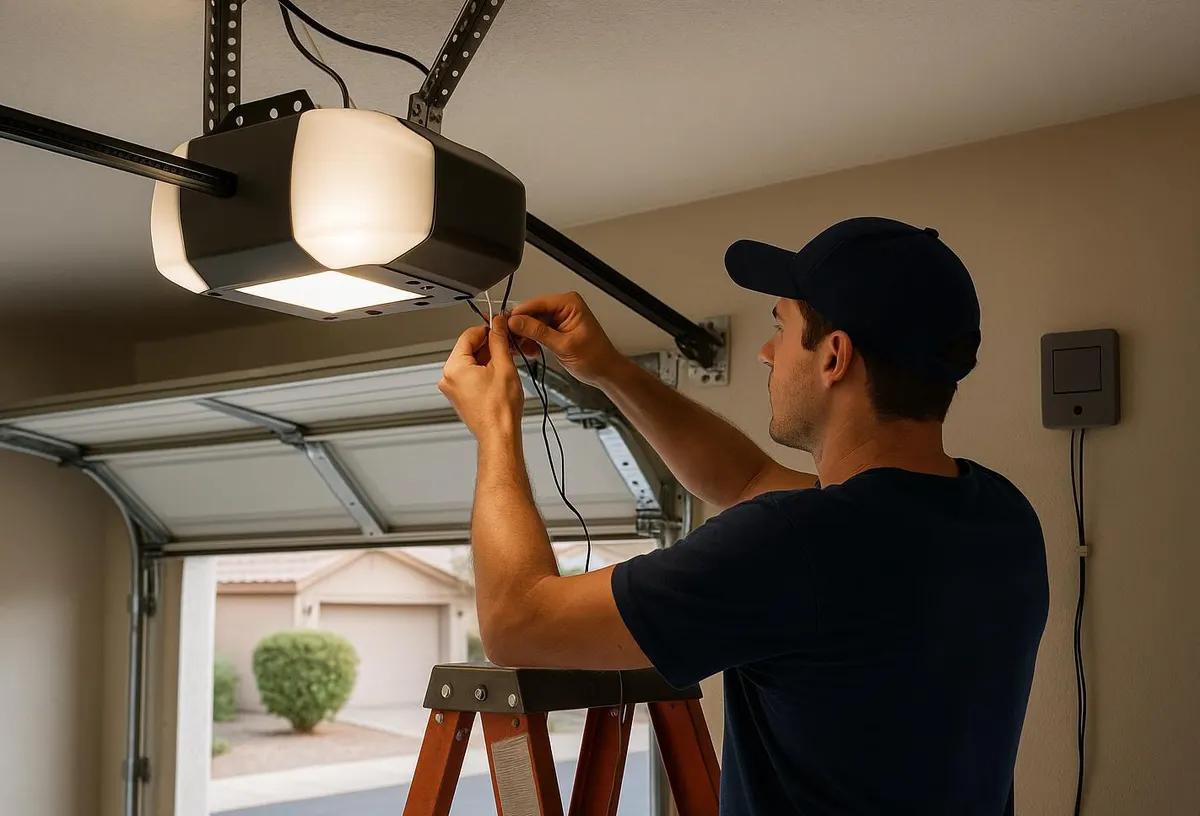
5. Test the Opener and Backup Battery
Cold weather is tough on garage door opener motors and sensors, and a power outage during a nor'easter is exactly when you don't want to be stuck manually hoisting a frozen door. If your opener has a battery backup, test it now. If it doesn't, this is a reasonable time to consider adding one, especially if your garage is your main entry point in bad weather.
6. Clear and Inspect the Sensors
Photo-eye sensors near the bottom of the tracks can get knocked out of alignment or fogged up with condensation once temperatures start swinging. A door that reverses for no clear reason, or won't close at all, is often just a dirty or misaligned sensor — an easy fix if caught before it's a recurring headache during a snowstorm.
If You Have an Original or Older Door
A lot of homes in this area still have their original garage doors, sometimes decades old. These doors often lack the insulation and modern weatherstripping channels that newer models have, which means more heat loss and more exposure to moisture at the seams. If yours is rattling, sagging slightly, or the panels show visible wear, winter will expose those weaknesses fast. Sometimes the right move is targeted repair; sometimes, especially with persistent cold drafts or a door that's fighting its opener every time it runs, replacement is the more practical long-term answer. Either way, it's better to make that call in October than during a cold snap.
When to Call Ellwood City Garage Door
If your inspection turns up a cable that's fraying, a spring that looks stretched or rusted, or an opener that's struggling and you're not comfortable diagnosing it further, that's the point to call in a professional rather than push through it. Ellwood City Garage Door handles spring replacement and garage door maintenance throughout the season, including full tune-ups that cover lubrication, hardware tightening, track alignment, and a safety check on the opener and sensors — the kind of once-a-year visit that catches small problems before they turn into a Saturday morning emergency with the door frozen shut.
If you're in Ellwood City, New Castle, Zelienople, Beaver Falls, Wampum, Enon Valley, Portersville, or Ellport and want your garage door ready before the first hard freeze, give Ellwood City Garage Door a call. We'll get it sorted before winter does.